


Akansha singh, Bhopal: Scientists at Jawaharlal Nehru University (JNU) have discovered a promising new approach against malaria and kala-azar. Their research shows that removing a specific human protein can weaken both parasites inside laboratory-grown human cells. The findings could open new doors for future treatments.
A New Battlefront
The research focuses on p38-MAPK, a protein involved in cellular signalling and immune responses. Scientists found that both parasites exploit this protein to survive and develop inside human cells.The study was published in Communications Biology on June 11, 2026. It was conducted by researchers at JNU’s Special Centre for Molecular Medicine.
The Protein’s Weak Spot
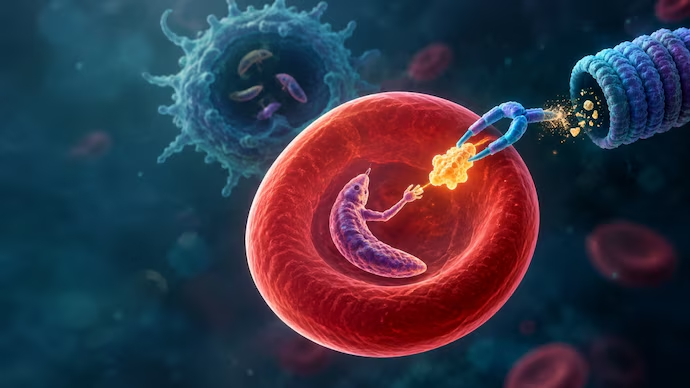
The team used a molecule called NR-7h to destroy the target protein. This approach differs from conventional treatments, which primarily attack the parasites themselves. Laboratory experiments showed a reduction in parasite levels after the protein was removed. The treatment also affected the malaria parasite’s ability to enter red blood cells and develop inside them.
Two Diseases, One Target
Malaria spreads through infected female Anopheles mosquitoes. Kala-azar, also known as visceral leishmaniasis, spreads through infected sandflies. Both diseases remain significant public health challenges. Drug resistance has complicated malaria treatment, while kala-azar can become fatal without appropriate treatment. By targeting a human protein used by both parasites, researchers are exploring a different strategy called host-directed therapy.
A Surprising Discovery
The study revealed an important difference between blocking a protein and destroying it. Simply inhibiting p38-MAPK did not produce the same results.
Removing the protein, however, reduced parasite levels in infected cells. Researchers also observed changes in immune responses that may have helped infected cells fight the parasites.
Hope, Not Yet a Cure
The findings remain at an early research stage. Experiments have been conducted in laboratory-grown human cells, not in patients. Further studies must establish the approach’s safety and effectiveness before clinical trials can begin. Since p38-MAPK also performs essential functions in the human body, researchers must carefully examine potential side effects.