


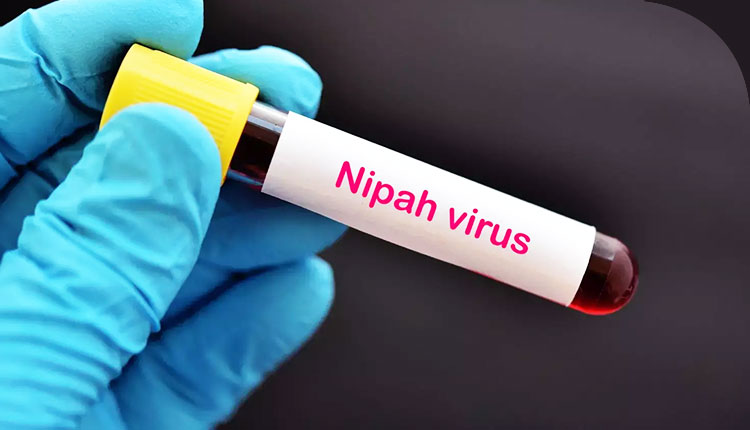
Report By, Swapnaleena Paul: AIIMS Kalyani, Kolkata: A suspected outbreak of the Nipah virus has placed Kolkata and surrounding districts of West Bengal on high alert, after two critically ill healthcare workers tested positive in preliminary screenings, prompting swift containment measures by state and central health authorities in January 2026. The cases, detected in the Barasat area of North 24 Parganas, have raised concerns due to the virus’s high fatality rate and history of limited but dangerous outbreaks in India.
Two healthcare workers in the Kolkata region test positive in initial screenings as state and central teams work to contain a possible outbreak.
The individuals affected are two nurses employed at a private hospital in Barasat, both of whom are currently receiving intensive care and are reported to be on ventilator support. Samples collected from the patients were tested at the Virus Research and Diagnostic Laboratory at AIIMS Kalyani, where initial results indicated Nipah virus infection. Final confirmation is awaited from the National Institute of Virology, Pune, the country’s apex laboratory for high-risk pathogens.
Health officials confirmed that the suspected cases were identified on January 11, triggering emergency public-health protocols. The West Bengal government, in coordination with the Union Ministry of Health and Family Welfare, immediately began contact tracing to identify individuals who may have been exposed to the patients during their infectious period. According to officials, dozens of contacts, including hospital staff and family members, are under medical observation, though no evidence of wider community transmission has been established so far.
The central government has deployed a National Joint Outbreak Response Team to assist the state administration. The team includes epidemiologists, virologists, and public-health specialists tasked with surveillance, containment, and assessment of potential zoonotic sources. Union Health Minister J.P. Nadda has assured the state of full logistical and technical support, while Chief Minister Mamata Banerjee has urged the public to remain calm and avoid panic.
Nipah virus is a zoonotic disease, meaning it can spread from animals to humans, most commonly through fruit bats, which are natural carriers. Transmission can also occur through close human-to-human contact via bodily fluids. Symptoms typically begin with fever, headache, and muscle pain, and can rapidly progress to severe respiratory illness and encephalitis. The virus is known for its high mortality rate, which has ranged between 40 and 75 percent in past outbreaks.
India has previously recorded Nipah outbreaks in Kerala, where rapid isolation, aggressive contact tracing, and public awareness helped prevent large-scale spread. Drawing from that experience, West Bengal health authorities have intensified hospital infection-control measures, advised the public to avoid consuming partially eaten or uncovered fruits, and instructed medical facilities to report any patients presenting with unexplained fever or neurological symptoms.
At present, no specific antiviral treatment or vaccine exists for Nipah virus, making early detection and containment critical. Officials emphasized that while the situation is serious, there is no cause for alarm if safety guidelines are followed and accurate information is relied upon. The state health department has also activated helplines and emergency response units to address public concerns.
As investigations continue, authorities remain focused on determining the source of infection and preventing further spread. The coming days will be crucial in establishing whether the cases remain isolated or signal a broader public-health challenge for the region.