

Feature by: Swapnaleena Paul : For years, one question dominated every discussion around Prime Video’s live-action adaptation of God of War. Who could convincingly portray Kratos? In the last 24 hours, that question has been answered with clarity as Ryan Hurst was officially confirmed for the role. The announcement has done more than end speculation. It has shifted confidence toward the project and sharpened expectations around its creative direction.
Kratos is not simply a figure of strength. Across two decades of storytelling, he has evolved into a character defined by internal conflict, grief, and restraint. Translating that complexity to live action demands an actor capable of expressing weight without excess. Hurst’s career suggests exactly that capability. His performances have consistently focused on emotionally burdened characters whose power lies as much in silence as in action.
A Familiar Voice at the Center of the Story
Hurst’s casting carries additional significance because he already has a history with the franchise. In God of War Ragnarök, he voiced Thor, delivering a portrayal that was widely praised for its emotional depth. That performance demonstrated his understanding of the series’ tone, one rooted in psychological consequence rather than spectacle alone.
Moving from voicing a major supporting character to embodying the central figure in live action is rare. It also signals continuity. Hurst is already fluent in the emotional language of God of War, which reduces the risk of tonal disconnect that often undermines adaptations. His transition suggests the series is prioritizing internal authenticity over superficial resemblance.
The Norse Era Sets the Emotional Frame
Prime Video’s adaptation is expected to focus on the Norse-era narrative introduced in the 2018 reboot. This chapter of God of War redefined Kratos as a father navigating grief and responsibility while attempting to shield his son from the violence that once defined him. It is a quieter, more reflective story than the franchise’s earlier Greek saga.
Casting Hurst strongly aligns with this version of the character. His screen presence is grounded and introspective, making him well suited to portray a Kratos who is constantly negotiating between rage and restraint. The emphasis is clearly on character evolution rather than relentless action.
A Creative Team Built for Long-Form Storytelling
Behind the scenes, the series brings together experienced hands in serialized drama. The project is being developed for Prime Video by Sony Pictures Television in collaboration with PlayStation Productions. The show has reportedly received a two-season order, reflecting strong confidence in its long-term potential.
The series is led by showrunner Ronald D. Moore, known for balancing expansive mythology with deeply personal storytelling. Early episodes are set to be directed by Frederick E.O. Toye, further reinforcing expectations of a grounded and cinematic approach rather than a purely effects-driven spectacle.
Why the Announcement Resonated Immediately
Casting announcements are routine in television development, but this one resonated quickly and widely. Part of that response stems from relief. Fans of God of War have been vocal about their concerns regarding live-action adaptations, particularly the risk of reducing complex characters to visual caricatures.
Hurst’s casting suggests a different philosophy. Rather than choosing a performer solely for physicality or star power, the series has opted for emotional credibility. It signals that the adaptation understands Kratos not as a costume, but as a psychological journey.
More Than a Physical Role
Kratos’ visual identity is iconic, but his power has always come from tension and restraint. He is dangerous not because he is constantly violent, but because of what he is capable of becoming if he loses control. Hurst’s acting style aligns closely with this idea. His characters often convey threat through presence rather than action, which is essential for sustaining dramatic weight across multiple seasons.
This approach also suggests the series will trust its audience to engage with quieter moments. Silence, hesitation, and moral conflict are expected to play as large a role as combat and mythology.
What Comes Next for the Series
With Kratos cast, attention now turns to the remaining ensemble, particularly Atreus, whose relationship with his father forms the emotional core of the Norse saga. Casting that role will be critical in determining whether the series achieves the depth it promises.
Production is expected to take place in Vancouver, although an official filming start date has not yet been announced. As development progresses, early visual materials and casting news will offer further insight into how faithfully the world of God of War is being translated for television.
A Defining Step Forward
In just 24 hours, Prime Video’s God of War has moved from cautious anticipation to purposeful momentum. Ryan Hurst’s casting does not guarantee success, but it establishes intent. It confirms that the series aims to be character-driven, emotionally grounded, and respectful of its source material.
For a story built on consequence and legacy, that decision matters. And for the first time since the adaptation was announced, God of War feels less like a risky experiment and more like a carefully considered epic in the making.
God of War Series: Ryan Hurst Confirmed as Kratos in Prime Video’s Live-Action Adaptation

Byagnipatrikadesk
Jan 15, 2026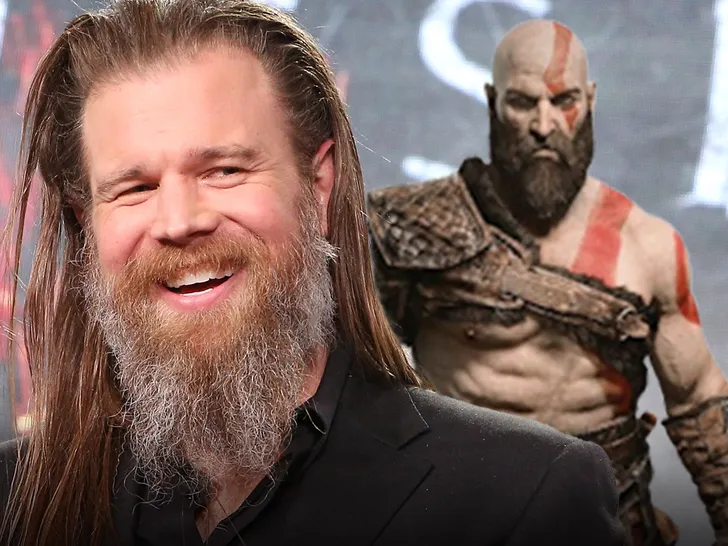 Ryan Hurst (left) has become a frontrunner in fan discussions to portray the live-action Kratos (right). Having already voiced Thor in God of War Ragnarök, Hurst possesses a unique internal understanding of the franchise's emotional complexity and Norse-era tone.