


Report by: Swapnaleena Paul.
Jeddah, Saudi Arabia, January 12, 2026: FC Barcelona lifted the Supercopa de España after a dramatic and chaotic 3–2 victory over arch-rivals Real Madrid in the 2026 final at the King Abdullah Sports City Stadium in Jeddah, Saudi Arabia. Played at a relentless pace and defined by wild momentum swings, the season’s first trophy was decided by moments of attacking brilliance, defensive lapses, and late-game resilience as Barcelona survived a frenetic El Clásico on neutral ground.
Barcelona survive a manic El Clásico final at King Abdullah Sports City Stadium, overcoming a frenetic first half and late pressure to lift the Supercopa de España.
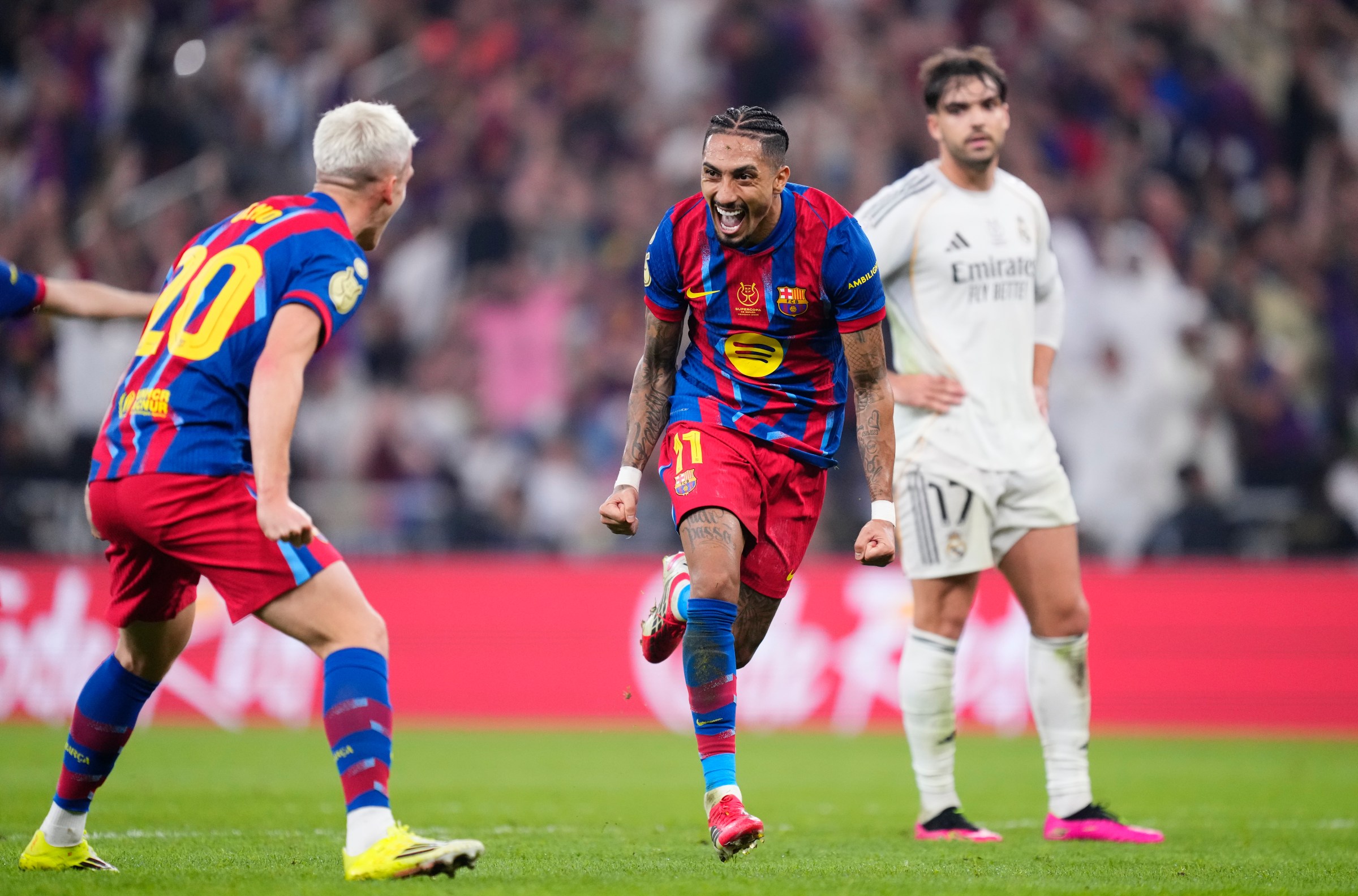
Barcelona began the final with authority, asserting territorial dominance through aggressive pressing and controlled buildup under Hansi Flick. Their early composure was rewarded in the 36th minute when Raphinha opened the scoring, finishing confidently inside the box after sustained pressure pinned Madrid deep in their own half. The goal reflected Barcelona’s early superiority and appeared to give them control of the contest.
What followed, however, was a spell of extraordinary chaos that transformed the match. In first-half stoppage time, Real Madrid struck back when Vinícius Júnior capitalised on a defensive error to race through and slot home the equaliser in the 45+2nd minute. Barcelona responded immediately. From the restart, Robert Lewandowski restored the lead in the 45+4th minute with a precise curling finish, only for Madrid to equalise again moments later as academy graduate Gonzalo García rose to head home in the 45+6th minute. The astonishing four-goal sequence ensured the teams went into the interval locked at 2–2, having produced one of the most manic halves in Supercopa history.
The second half unfolded with greater tactical tension. Barcelona reasserted control in midfield, circulating possession through Pedri while pushing their defensive line higher to compress space and restrict Madrid’s counter-attacks. Real Madrid, meanwhile, sought to exploit moments in transition and introduced Kylian Mbappé late on as they chased a breakthrough.
The decisive moment arrived in the 73rd minute. Raphinha, Barcelona’s most influential attacking outlet on the night, struck again as his effort took a decisive deflection off Raúl Asencio and beat the goalkeeper, giving Barcelona a 3–2 lead. The goal, Raphinha’s second of the final, ultimately proved decisive and capped a commanding individual performance.
The closing stages were defined by tension and survival. Frenkie de Jong, who had been central to Barcelona’s midfield control, was sent off in stoppage time for a high challenge on Mbappé, forcing Barcelona to defend their narrow advantage with ten men. Madrid pressed relentlessly in the final minutes, but Barcelona’s defensive organisation held firm as they protected their lead until the final whistle.
Beyond the scoreline, the final showcased contrasting narratives. Barcelona’s victory was built on proactive pressing, positional discipline, and decisive wing play, while Madrid’s threat came through direct transitions and late attacking reinforcements. Raphinha’s brace proved the difference on a night when defensive fragility and attacking sharpness coexisted in equal measure.
As the final whistle echoed around King Abdullah Sports City Stadium, Barcelona’s players celebrated a Supercopa triumph forged in adversity and drama. Winning 3–2 against their fiercest rivals in such chaotic fashion delivered not only silverware but also a statement of resilience and belief. The Supercopa success offered an early-season benchmark for Barcelona’s ambitions, reaffirming their capacity to navigate disorder, absorb pressure, and prevail on the biggest stage.