


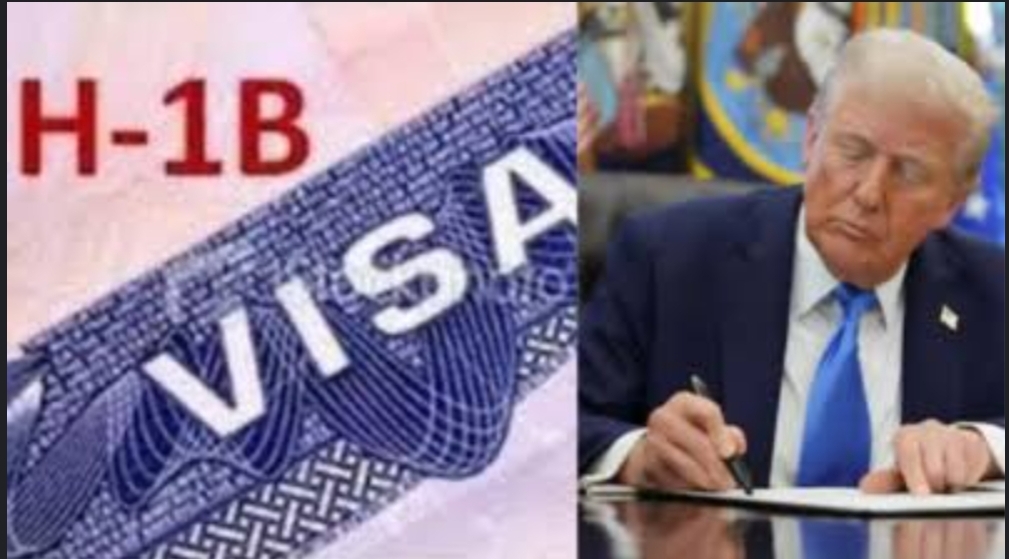
The H-1B visa is a non-immigrant visa category in the United States that allows U.S. employers to hire foreign workers temporarily in specialty occupations. These occupations are ones which require the theoretical and practical application of a body of highly specialized knowledge, and the minimum requirement for entry into the field is usually a bachelor’s degree or its equivalent.
Origins and Legislative Framework
The H-1B visa program was established by the Immigration Act of 1990 to fill gaps in the U.S. labor market where employers could not find suitably qualified U.S. workers. Over time, subsequent legislation has refined how it works. For example, the American Competitiveness and Workforce Improvement Act (ACWIA) of 1998 introduced fee structures and protections for U.S. workers. The American Competitiveness in the 21st Century Act (AC21), passed in 2000, added more flexibility regarding changes of employer, extensions, and visa “portability.”
Eligibility and Requirements
To qualify for an H-1B visa in a “specialty occupation,” several conditions must be met. The beneficiary (the person applying) must hold at least a U.S. bachelor’s degree or its foreign equivalent in a field directly related to the job. If a foreign degree is used, it must be shown to be equivalent under U.S. educational standards.
The employer must also fulfill a number of obligations. Before filing a petition, an employer must submit a Labor Condition Application (LCA) to the Department of Labor, attesting among other things that they will pay the H-1B worker at least the prevailing wage or the wage paid to similarly qualified U.S. employees, whichever is higher. This is intended to protect U.S. workers from wage suppression and unfair competition.
Duration, Extensions, and Related Statuses
Typically, an H-1B visa is granted for an initial period of up to three years. It can be extended, together making a maximum of six years under ordinary circumstances.
There are exceptions that allow for extensions beyond six years. For instance, if the visa holder has started the immigration/permanent residency (green card) process under certain preference categories and certain requirements are met (such as having a Form I-140 approved or a labor certification filed sufficiently in advance), the H-1B status may be extended.
Dependents of H-1B visa holders (spouses and unmarried children under 21) may accompany them under H-4 status. However, H-4 holders generally do not have full work authorization unless certain conditions are met.
Cap, Demand, and Economic Role
There is an annual cap on how many new H-1B visas can be issued. Under current law, the cap is 65,000 for new H-1B visas each fiscal year, with an additional 20,000 slots reserved for individuals who earned a master’s degree or higher from a U.S. institution of higher education.
Demand for H-1B visas often exceeds supply; in many years, the cap is reached quite early in the filing period. This has led to lotteries to determine which petitions will be processed.
Economically, H-1B visa holders contribute significantly in fields such as engineering, technology, health sciences, research, and academia. They are frequently credited with helping U.S. firms stay globally competitive by filling high-skill roles that are hard to staff domestically. At the same time, there are ongoing debates about whether the program displaces U.S. workers, whether wages are depressed in certain sectors, and how to ensure oversight and protect both foreign and domestic workers.
Challenges, Criticism, and Reform Proposals
Critics of the H-1B program raise several concerns. One is misuse or abuse by employers—for example, substituting cheaper foreign workers for qualified U.S. workers, or underpaying H-1B holders relative to what U.S. professionals earn. Another concern is the complexity and uncertainty in the application and extension process, which sometimes leads to delays, legal complications, and stress for visa holders.
There have been legislative and administrative proposals to reform the program. These include increasing wages that H-1B workers must be paid, tightening enforcement to prevent abusive practices, increasing transparency in the petition process, and reconsidering the cap numbers or how they are allocated. Some suggestions also focus on ensuring U.S. worker interests are protected, for example by stronger recruitment requirements or by prioritizing visas for the highest skill or paying jobs.
The H-1B visa remains a critical instrument for U.S. employers in sectors that demand highly skilled labor—particularly science, engineering, technology, and medicine. While it offers valuable opportunities for qualified foreign nationals, the program also faces significant challenges in balancing the interests of U.S. workers, foreign workers, employers, and the integrity of immigration policy. Ongoing legal, regulatory, and legislative attention is likely to shape its evolution in the years ahead.
Source: Congressional Research Service, U.S. Citizenship and Immigration Services, U.S. Department of Labor, American Immigration Council