


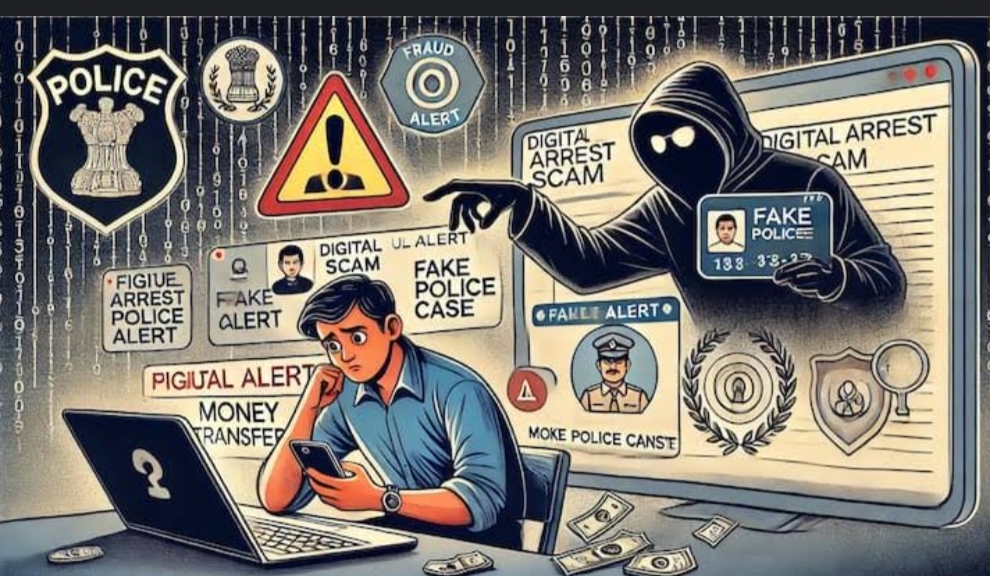
Rishita Gangrade: In a small town near Jhansi, an elderly man received a video call from his “nephew,” urgently asking for ₹20,000 to be transferred immediately for a medical emergency.
The face, the voice — everything matched. The man transferred the money. Hours later, a real call from his actual nephew confirmed the worst: it was a scam. What fooled him wasn’t just a clever lie it was a deepfake.
Once a sci-fi-like concept, deepfake technology where artificial intelligence can clone faces and voices has quietly crept into the most unexpected corners of India. What was once a toy for big-budget creators has now become a tool of crime, and small-town India is the new hunting ground.
Why Small Towns? The Trust Factor
Unlike metro cities, smaller towns often operate on high-trust relationships. People know each other by face, voice, or family names. But deepfakes are now weaponizing that trust.
“Here, we don’t second-guess a familiar face or name. That’s exactly why these frauds are working,” says Ritesh Pawar, a cyber cell officer in Chhattisgarh. He adds that the number of such cases reported has doubled in the last year alone and many more go unreported out of shame.
Cheap Tools, Costly Mistakes
The shocking part? It no longer takes expensive software to create these illusions. Free mobile apps and AI websites can mimic a voice with just a 30-second audio clip or superimpose a face using a single selfie. Once created, these fake videos or calls are used to:
Scam money from family or friends
Impersonate authority figures (like school principals or bank officials)
Spread fake political or communal messages
The real cost? Not just money. Victims often lose their sense of safety, especially when the scam involves emotional manipulation using loved ones’ faces or voices.
Law and Lag:
While India’s IT Act and cyber laws cover digital fraud, deepfake specific regulations are still evolving. Most police departments in smaller towns lack trained cyber units or forensic tools to detect manipulated media.
Meanwhile, the criminals are always a step ahead often operating across state lines or anonymously on Telegram groups and dark web channels.
A Digital Literacy Emergency
Experts say what India needs isn’t just better tech, but better awareness. Digital literacy isn’t just knowing how to use a phone. It’s knowing when not to believe one, says digital safety educator Anjali Rawat, who runs workshops in rural Madhya Pradesh.
From WhatsApp to YouTube, misinformation and deepfakes often blend so seamlessly into daily media that even the smartest people fall for them. We always thought crime wore a mask. Now, it wears a familiar face, she adds.
The Way Forward
Startups are emerging to fight deepfakes with AI-powered detection tools. The government is pushing for Digital India Act reforms. But change takes time. For now, awareness is the first line of defense.
Until laws catch up and tools become widespread, the best protection for small-town India is knowledge. Because in a world where even your mother’s face can be faked, digital trust must be earned, not assumed.