


By Rishita Gangrade | Agni Patrika
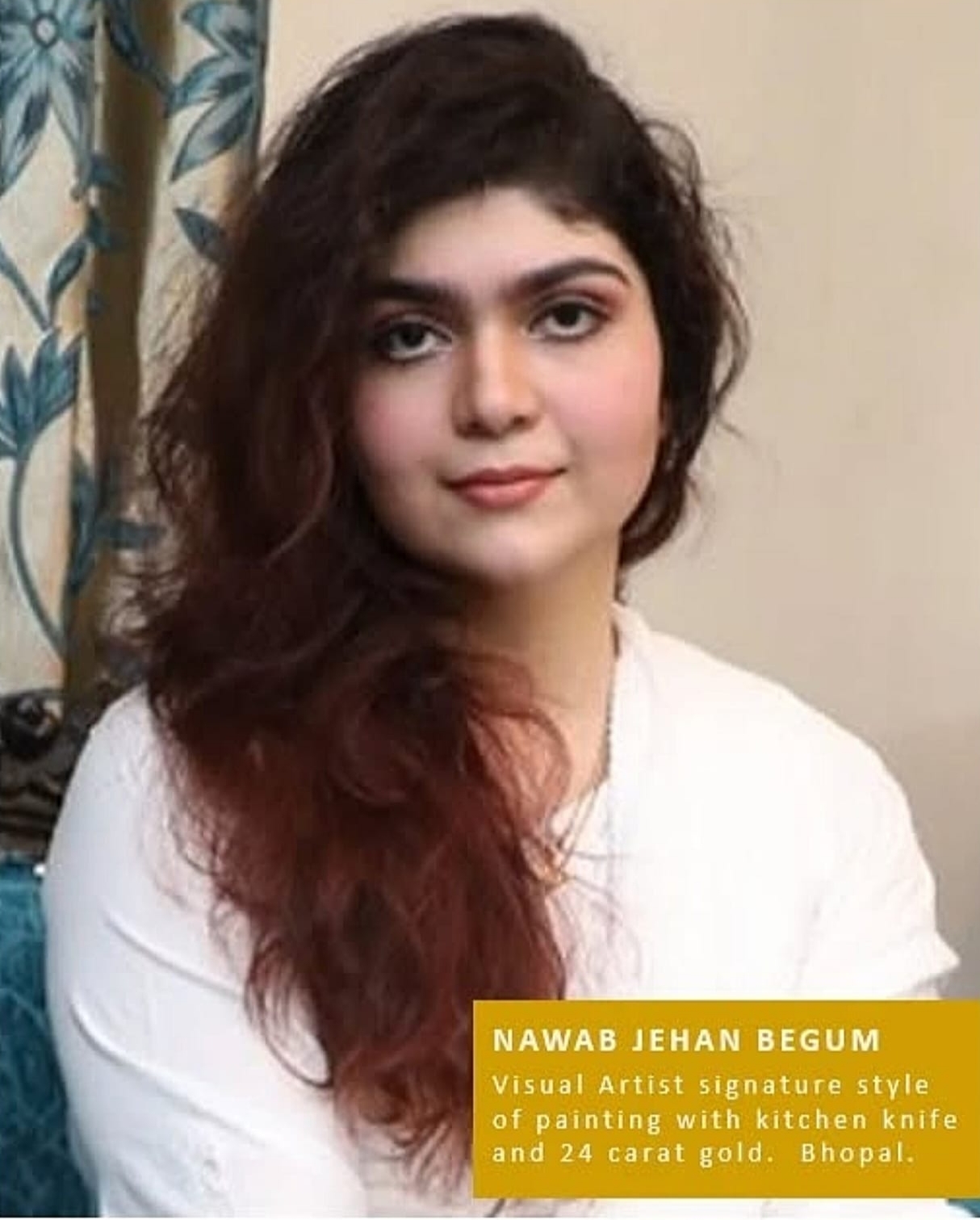
In a world where modern art often overshadows tradition, Nawab Jehan Begum stands tall as a beacon of heritage, innovation, and cultural pride. An internationally acclaimed artist, she has become a pioneering figure by blending ancient Indian tribal art with contemporary techniques—crafting a visual narrative that resonates across borders.
A Journey Born from Crayons and Imagination
Nawab Jehan Begum’s artistic voyage began as a toddler. Unlike many, she didn’t start with pencils or pens, but with crayons in her tiny hands, painting her imagination across pages. Her creativity flourished from a very young age, and with the encouragement of her family and the trials of life shaping her path, she decided to turn her passion into her profession.
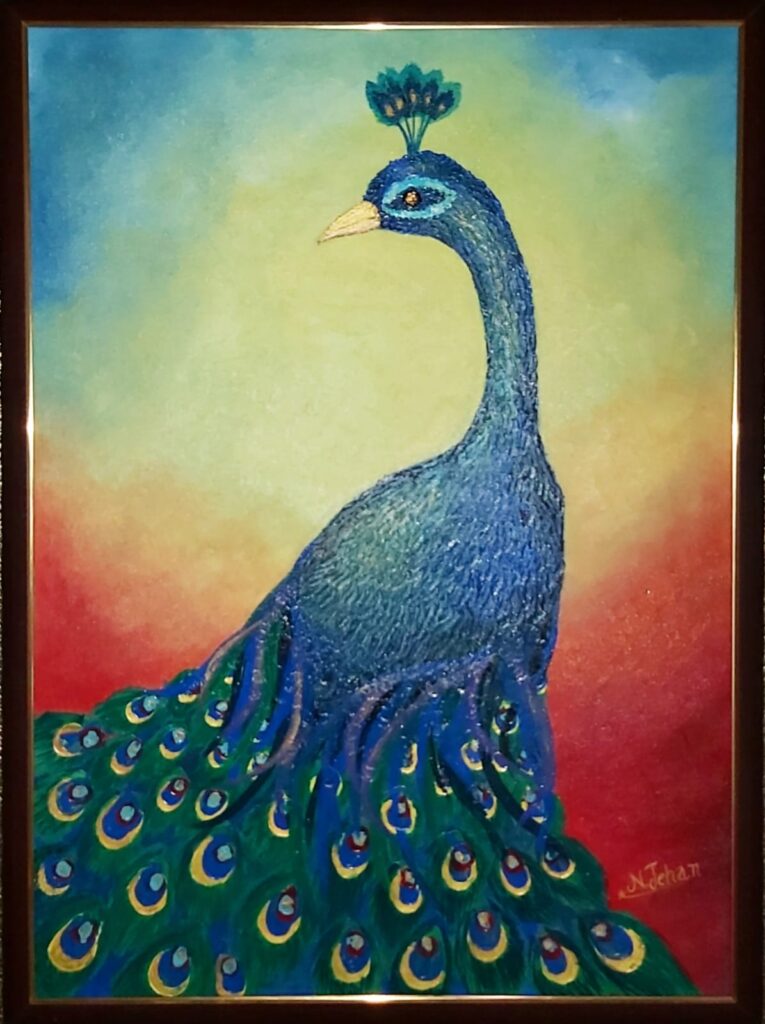
Despite having pursued multiple educational avenues—including a makeup artist course from VLCC and an IIFT course—her true identity emerged through her Master’s degree in Drawing and Painting. It was here that she embraced her artistic destiny. Her passion for art, rooted in emotion and culture, found a medium to thrive—and flourish.
The Art of the Extraordinary: Gold, Knives, and Soul
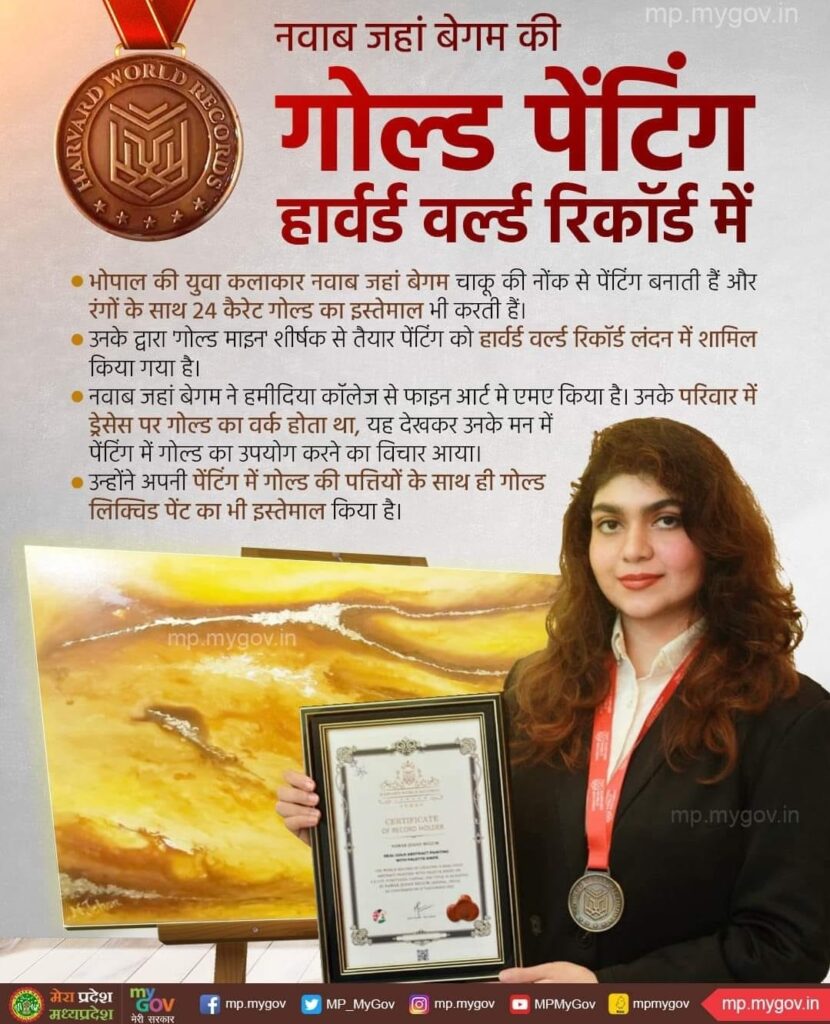
Nawab Jehan’s signature artistic style is as unique as her journey. She paints with kitchen knives and incorporates real gold into her artworks—a blend that gives her creations a distinct identity.
The idea came to her in the most ordinary setting—while cutting fruits in the kitchen. An artist’s mind, however, sees beauty and potential in everyday life. This mundane act sparked an idea: why not use a kitchen knife as a painting tool? The textures and results captivated her, and this experimental thought became a permanent technique.
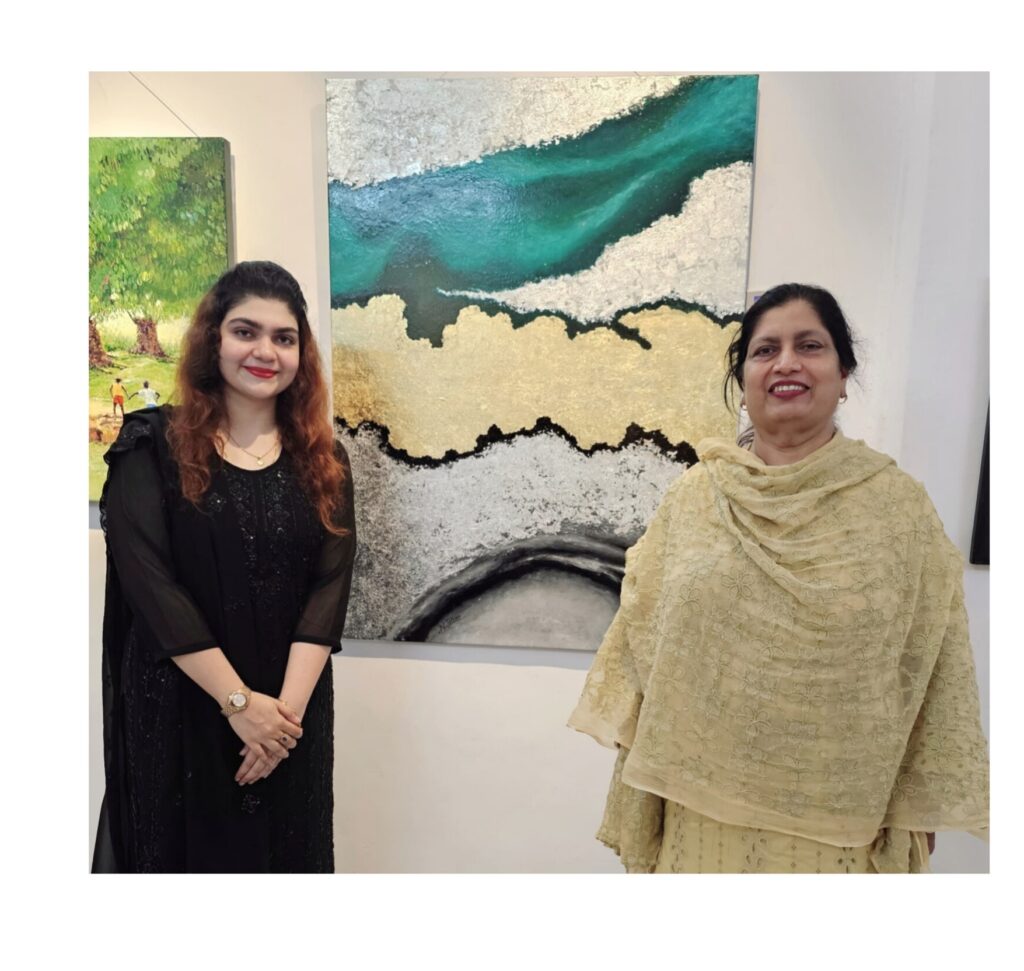
Gold, on the other hand, entered her palette through cultural sentiment and family influence. With her roots tracing back to the royal family of Bhopal, Jehan had often heard stories of a time when real gold and silver adorned everyday life—from utensils to clothing. Inspired by these tales and by her mother’s fondness for gold, she began incorporating genuine gold leaf into her artworks, connecting her royal lineage with her creative expression. The result? A compelling fusion of traditional elegance and modern technique.
Tradition Meets Modernity: Bridging the Gap
Nawab Jehan Begum is deeply inspired by India’s tribal and folk art traditions, particularly Gond and Mandana art. During visits to her ancestral village, she observed women decorating walls with tribal motifs—timeless practices brimming with symbolic meaning.
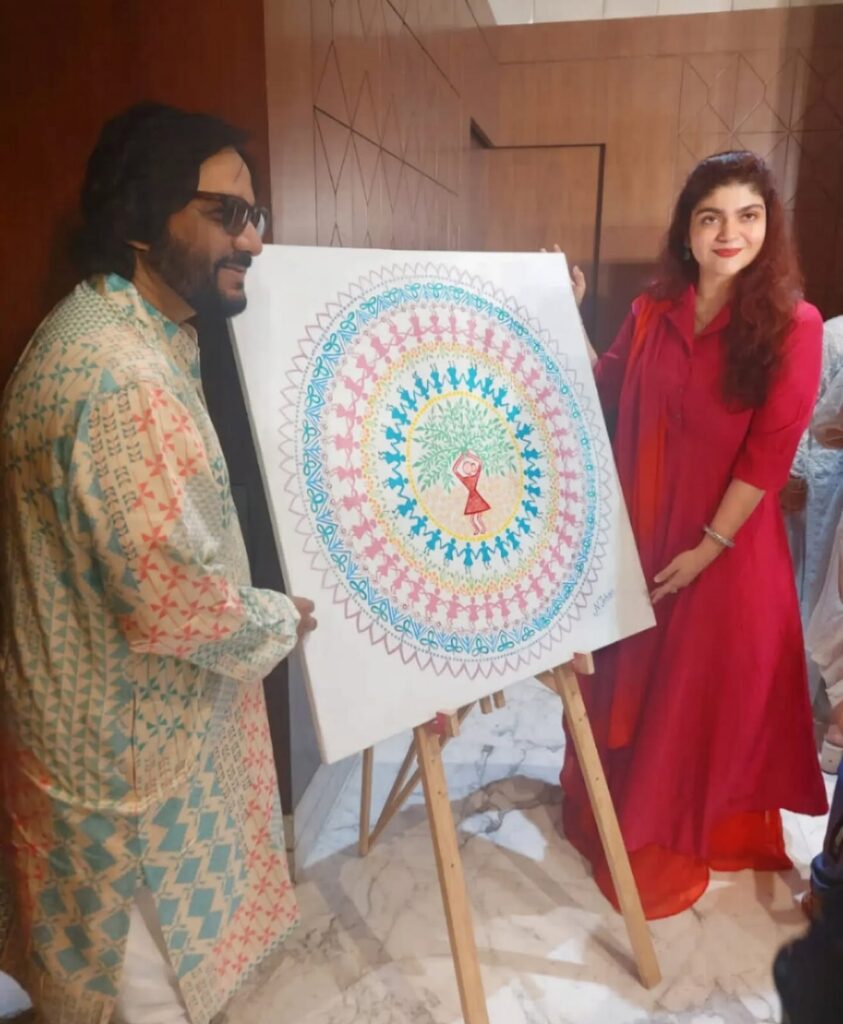
Realizing the fading popularity of these forms in modern settings, she took it upon herself to revive and reintroduce them through a new lens. By blending the rich visual language of tribal art with abstract contemporary forms, and infusing it with real gold and silver, she redefined how indigenous Indian art can be perceived—and valued—globally.
The Creative Process: A Flow of Spirit
For Nawab Jehan, creativity cannot be confined to a schedule. Her process is intuitive, spontaneous, and deeply spiritual. Sometimes, inspiration strikes late at night, and she works until dawn—completely immersed in her craft.
She describes this artistic state using the philosophical concept of Tao—where the subconscious mind takes over the conscious, allowing creativity to flow freely and naturally. While some preparation is required—such as sourcing certified gold and silver and selecting the right knives—her true masterpiece emerges from instinct and emotion.
Carrying Culture Beyond Borders
Her love for India is palpable. Whether it’s the joy she felt when someone recognized her as an Indian artist in Dubai or the pride she takes in showcasing India’s tribal heritage on international platforms—Nawab Jehan views her work as a tribute to her roots.
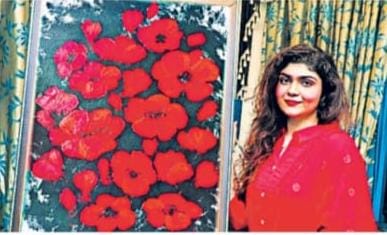
For her, cultural preservation isn’t just a mission; it’s a responsibility. Through her art, she aims to show the world the depth, beauty, and richness of Indian heritage. She believes that art is a powerful medium to narrate the stories of our soil, and she carries this message with every canvas she creates.Overcoming Challenges: A Woman.
Overcoming Challenges: A Woman with Grit
Despite her accomplishments, Nawab Jehan’s path hasn’t been without obstacles. As a woman, she has faced the typical safety concerns that come with international travel. At times, she’s encountered discrimination and racism—barriers that are, unfortunately, familiar to many artists from India, especially women.
But with unwavering support from her family, particularly her mother, she has faced these challenges with resilience. Her determination to represent her country and elevate its art forms has always outweighed the difficulties.
A Cultural Ambassador for India
More than just an artist, Nawab Jehan Begum sees herself as a cultural ambassador—a representative of India’s soul on the global canvas. Her dream is to see India recognized not just for its past glories, but for its thriving, evolving culture.
She especially hopes to empower women artists in rural areas, whose work often goes unrecognized. For her, supporting them is not just about promoting talent—it’s about breaking stereotypes and offering them a platform they deserve.
Final Thoughts: A Royal Vision for Art
From a creative child with crayons to a renowned international artist with gold-laced canvases, Nawab Jehan Begum’s journey is as inspiring as it is unique. Her art, steeped in tradition and guided by intuition, speaks of a love for country, culture, and creation.In a world rapidly changing, she reminds us of the importance of staying rooted—while still reaching for the stars.