


Rishita Gangrade
The Rising Storm: Escalating Tariffs and Shrinking Hopes
U.S. President Donald Trump’s latest tariff escalations have directly struck at the heart of Prime Minister Narendra Modi’s flagship Make in India initiative. With tariffs soaring from 25% to upwards of 50%, Indian exporters are feeling the pressure like never before. Industries ranging from apparel and jewelry to seafood are facing brutal market contractions—and urgent calls to relocate production to countries like Vietnam and Bangladesh.
Manufacturing Margins Under Siege
Key sectors aligned with the Make in India vision are particularly vulnerable:
- Apparel & Garments: Suppliers to major U.S. retailers are already seeing orders scrapped or shunted abroad amid tariff threats.
- Textiles, Carpets, Diamond Polishing & Shrimp: A recent Crisil report warns of severe earnings hits if another 25% surcharge takes effect from August 27.
- Non-Leather Footwear: Brands like Nike, Adidas, and Crocs, operating under Make in India, now face steep tariffs that could collapse export competitiveness.
- Electronics: Though more insulated due to Apple’s growing footprint in India, this sector is pivoting to markets beyond the U.S. to offset risks.
Make in India: Ambitions vs. Reality
Launched in 2014, Make in India sought to increase manufacturing’s share of GDP from 16.7% in 2013–14 to 25% by 2022—goals that remain unfulfilled, with the share even slipping to around 15.9% in 2023–24.
While the initiative has attracted major investments—Apple now manufactures a sizable share of its iPhones in India—current tariff shocks threaten to derail much of the progress.
Geopolitical Ripples & Strategic Rearrangements
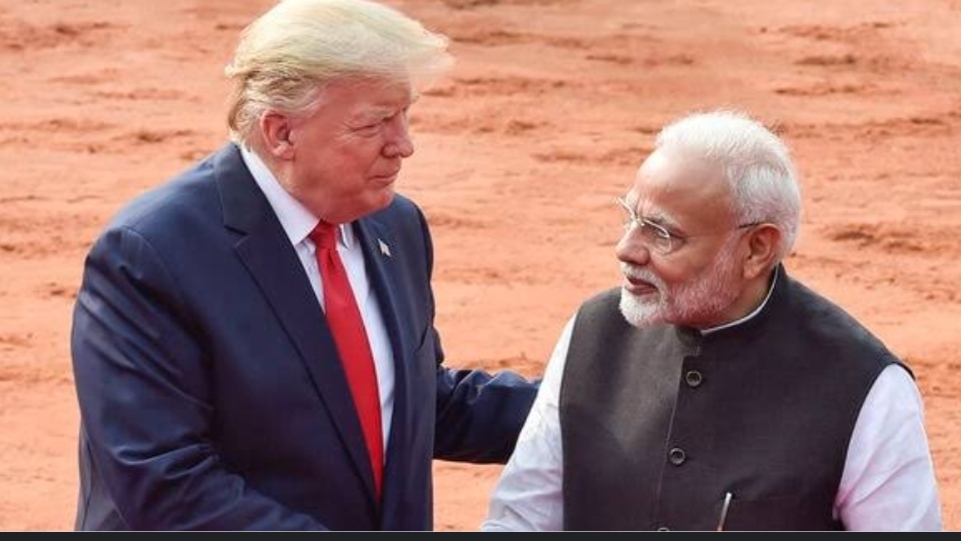
The tariff surge marks the end of the personal camaraderie once celebrated between Trump and Modi. The abrupt policy escalation, compounded by U.S. overtures toward Pakistan, has dimmed strategic optimism and rattled India’s diplomatic calculus.
India, meanwhile, is recalibrating: doubling down on self-reliance campaigns like Atmanirbhar Bharat, promoting “vocal-for-local” manufacturing, and eyeing alternative export markets beyond the U.S.
Make in India Faces a Crucial Test
Trump’s tariff gambit is more than a trade shock—it’s a test of India’s resolve. Without urgent domestic policy adaptation—such as lowering input tariffs, expanding non-U.S. export horizons, and attracting new investments—the decades-long vision of transforming India into a global manufacturing hub could stall.
Can Modi turn this adversity into reform-driven momentum—or will this be the setback that stalls the Make in India engine?
Sources:-
- Financial Times
- Economic Times
- Reuters
- Times of India
- Washington Post
- wikipedia