

Report by: Swapnaleena Paul: Next month, the most remote coastline on Earth is going to get very dark, very briefly. On February 17, a Ring of Fire solar eclipse will sweep across Antarctica. Unlike the 2024 total eclipse that clogged highways across North America and turned small towns into viewing camps, this one will be a lonely affair.
There will be no crowds, no roadside telescopes, no cheering when the Sun reappears. The Moon’s shadow will pass mostly over ice and open ocean, far from anywhere most people can reach.
It is a strange logistical quirk of astronomy. One of the solar system’s best light shows is happening in a place with almost no seats in the house. While most of us will follow it through satellite feeds and delayed clips online, the only people seeing it live may be the skeleton crews stationed at Antarctic research bases like Concordia or Neumayer III, assuming the clouds cooperate.
What Makes This a Ring of Fire Eclipse
For anyone who missed the memo, this is not a total eclipse. The Moon will pass in front of the Sun, but it will not be big enough to block it out completely. Right now, the Moon is at a farther point in its orbit, which makes it appear slightly smaller from Earth.
The easiest way to picture it is this. Imagine holding a penny over a nickel. You cover most of it, but a bright edge is still visible all the way around. That glowing rim is what gives annular eclipses their nickname, the Ring of Fire.
At the peak of the February 17 event, observers directly under the Moon’s path will see the Sun reduced to a thin, glowing hoop. Daylight will dim and shadows will sharpen, but the sky will not go dark. This is not the kind of eclipse where stars appear or temperatures drop sharply. Still, the visual is precise and unmistakable, and it lasts only a couple of minutes.
Why the Shadow Mostly Hits Empty Ice
The defining feature of this eclipse is not how it looks but where it happens. The Moon’s shadow will track almost entirely across Antarctica and the surrounding Southern Ocean, making it one of the least accessible eclipses in years.
Because of the continent’s position near the South Pole and the timing of the alignment, Antarctica ends up squarely in the firing line. For most of the world, including India, Europe, and North America, the eclipse will not be visible at all.
A few places at the planet’s southern edge will catch a glimpse. Cities like Cape Town in South Africa or Ushuaia in Argentina may see a small bite taken out of the Sun during the partial phase. But the full ring will remain out of reach, confined to ice, water, and sky.
A Masterpiece With No One in the Gallery
Eclipses usually bring people together. Ancient societies treated them as omens. Modern ones turn into travel events, complete with packed hotels and sold out flights along the path of totality.
This one will not.
Antarctica has no permanent residents. The only humans there are scientists and support staff rotating through research stations. Even for them, seeing the eclipse is uncertain. Antarctic weather ignores calendars, and a single cloud bank could wipe out the view entirely.
For anyone lucky enough to witness it, the scene will be hard to match. A thin, glowing ring hanging over a silent, frozen landscape, with no traffic noise, no applause, and no crowd. Just a brief alignment of Sun, Moon, and ice.
Why Scientists Are Paying Attention Anyway
So why bother tracking an eclipse that almost no one can see?
For atmospheric scientists working on the ice, it is a rare chance to watch how Antarctic air reacts when the heater, the Sun, is suddenly turned down. Even a partial dip in solar radiation produces measurable changes in temperature, light levels, and the upper atmosphere.
Antarctica is already the world’s most sensitive thermometer when it comes to climate and atmospheric shifts. An eclipse adds a clean, precisely timed experiment to that environment. Satellites overhead and instruments on the ground will track how the atmosphere responds minute by minute as sunlight fades and returns.
That data feeds into a broader understanding of how energy moves through Earth’s systems, especially in extreme regions where small changes can have outsized effects.
Watching From Everywhere Else
For everyone not stationed at the bottom of the world, the February 17 eclipse will be a secondhand experience. Space agencies and observatories are expected to share live streams, simulations, and satellite imagery showing the Moon’s shadow sliding across the polar region.
It is the modern way of eclipse watching. Geography still decides who gets the best seat, but technology ensures the rest of the world is not completely left out.
Astronomers are quick to point out, though, that watching on a screen is not the same as standing beneath an eclipsed Sun. The light feels different. The air feels different. That part does not translate through pixels.
A Note on Safety
One thing does carry over, no matter where you are watching from. Even during an annular eclipse, looking directly at the Sun without proper eye protection is dangerous. That bright ring can cause permanent eye damage.
Certified solar viewing glasses or proper filters are essential. The ring may be thinner than usual, but it is still the Sun.
A Quiet Show at the End of the World
The annular phase will last only a couple of minutes. Then the Moon will slide on, the Sun will return to normal, and Antarctica will slip back into its familiar stillness.
So unless you have a research permit or a very expensive icebreaker cruise booked, you will be watching this one on a screen like the rest of us. It is a cold, two minute show at the bottom of the world, but in a year full of constant noise, maybe a private eclipse is exactly what we need.
Ring of Fire Solar Eclipse on February 17, 2026 Will Light Up Antarctica

Byagnipatrikadesk
Jan 15, 2026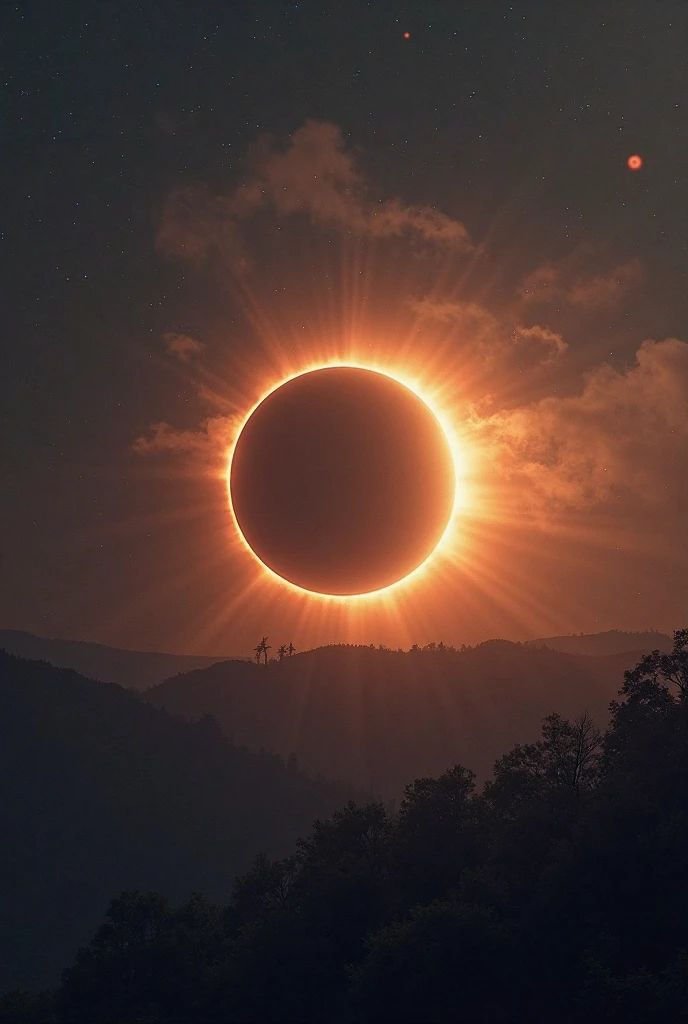 "On February 17, 2026, a rare Ring of Fire solar eclipse will sweep across Antarctica. Learn why this isolated event is a unique masterpiece for science."