


Report by: Swapnaleena Paul.
Cooch Behar, West Bengal: Political tensions escalated sharply in Cooch Behar over the last two days following allegations of large-scale errors in the ongoing Special Intensive Revision (SIR) of electoral rolls, with the issue emerging as a major flashpoint ahead of the 2026 West Bengal Assembly elections.
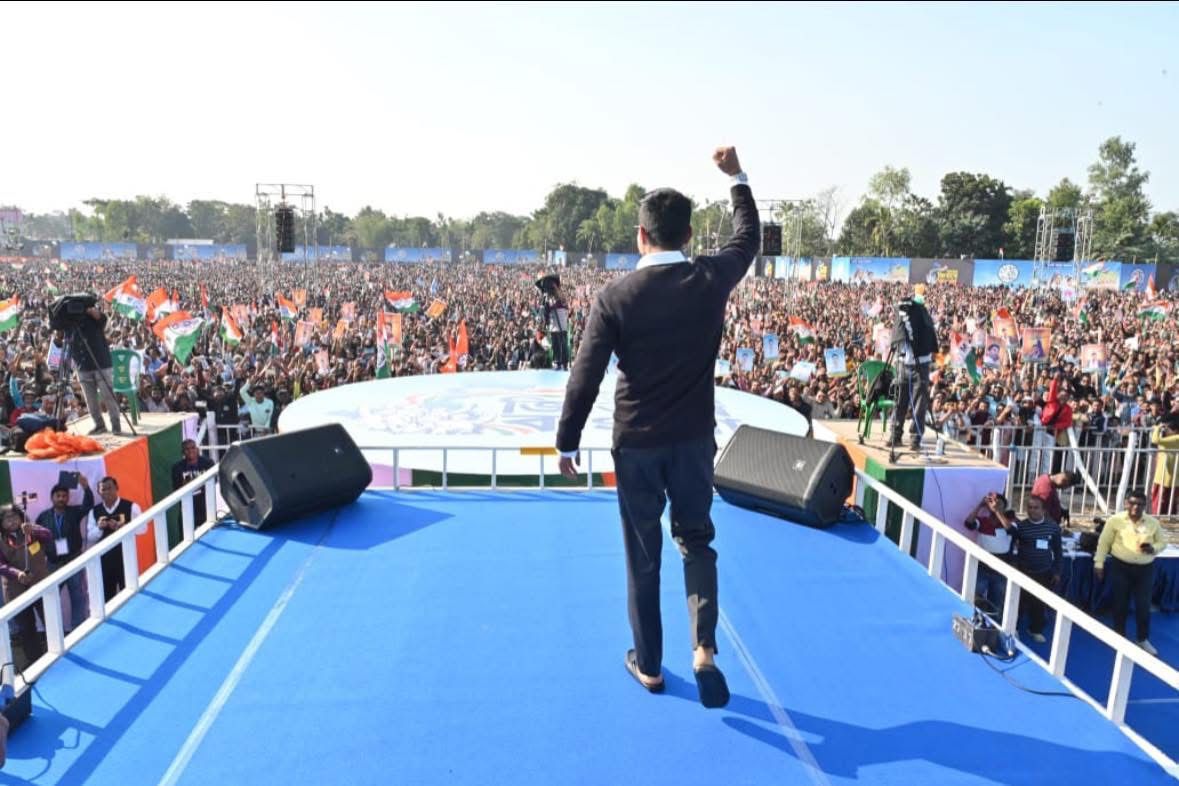
The controversy intensified on Tuesday when Abhishek Banerjee, national general secretary of the All India Trinamool Congress, held a public rally in Cooch Behar and accused the Election Commission of India and the BJP-led Centre of attempting to disenfranchise voters through the SIR process. During the rally, Banerjee presented several residents whom he claimed had been erroneously marked as “dead” in the draft electoral rolls despite being alive and residing in the district.
Calling the exercise a form of “vote-bandi,” Banerjee alleged that hundreds of thousands of voters in the district were facing scrutiny due to what election officials have termed “logical discrepancies” in voter records. He urged party workers to assist affected residents in filing claims and objections to ensure their names remain on the final electoral rolls.
Following the allegations, the Chief Electoral Officer of West Bengal sought a detailed report from the District Magistrate of Cooch Behar, asking officials to verify claims regarding voters being wrongly declared deceased. Election authorities have so far stated that the SIR process includes safeguards such as field verification and hearings to address such discrepancies before finalization.
Administrative Context and Recent Developments
The Special Intensive Revision is being conducted to update electoral rolls ahead of upcoming elections, with the stated aim of removing duplicate or ineligible entries while ensuring eligible voters are retained. However, the process has drawn criticism from opposition parties in West Bengal, particularly in border and plantation-heavy districts such as Cooch Behar.
In a significant administrative move reported earlier this week, the Election Commission approved the use of tea garden and cinchona plantation employment records as valid identity and residence documents for SIR verification in north Bengal districts, including Cooch Behar. The decision was taken following concerns that large numbers of plantation workers lacked conventional documentation such as Aadhaar cards or updated ration cards.
Election officials described the step as an effort to prevent the exclusion of long-term residents from the voter list, while maintaining the integrity of the revision process.
Ground-Level Anxiety and Political Fallout
Cooch Behar has seen growing anxiety at the grassroots level since SIR forms began circulating in villages over recent weeks. Reports from earlier phases of the exercise indicated mismatches between older voter rolls and current records in parts of the district, raising fears among residents that names could be deleted due to clerical or documentation issues.
The district’s demographic complexity—including former enclave residents, plantation workers, and border-area populations—has further complicated the revision exercise. Political parties have seized upon these concerns, with Trinamool Congress leaders framing the issue as one of federal overreach and voter suppression, while the Bharatiya Janata Party has defended SIR as a necessary measure to ensure clean electoral rolls.
The BJP has maintained that the revision is a routine administrative exercise mandated by law and accused the Trinamool Congress of politicizing the process to create confusion and mistrust among voters.
Official Position and What Lies Ahead
Election Commission officials have reiterated that SIR is being carried out according to established procedures, including door-to-door verification, public display of draft rolls, and opportunities for claims and objections. Data from SIR hearings across West Bengal indicate that only a limited number of entries have so far been flagged as ineligible following due process, though verification is ongoing.
The final electoral roll for West Bengal, including Cooch Behar district, is scheduled to be published on February 14, 2026, adding urgency to the resolution of pending claims and objections before the revision process is concluded.
With protests, rallies, and counter-statements continuing, the SIR exercise has moved beyond a bureaucratic update to become a politically charged issue in Cooch Behar. Observers note that how election authorities handle complaints and corrections in the coming weeks will be crucial in restoring public confidence.
As the final voter lists are yet to be published, both political mobilisation and administrative scrutiny are expected to intensify, keeping Cooch Behar at the centre of West Bengal’s evolving electoral discourse.